
Best Digital Camera for Beginners in 2026: Buying Guide
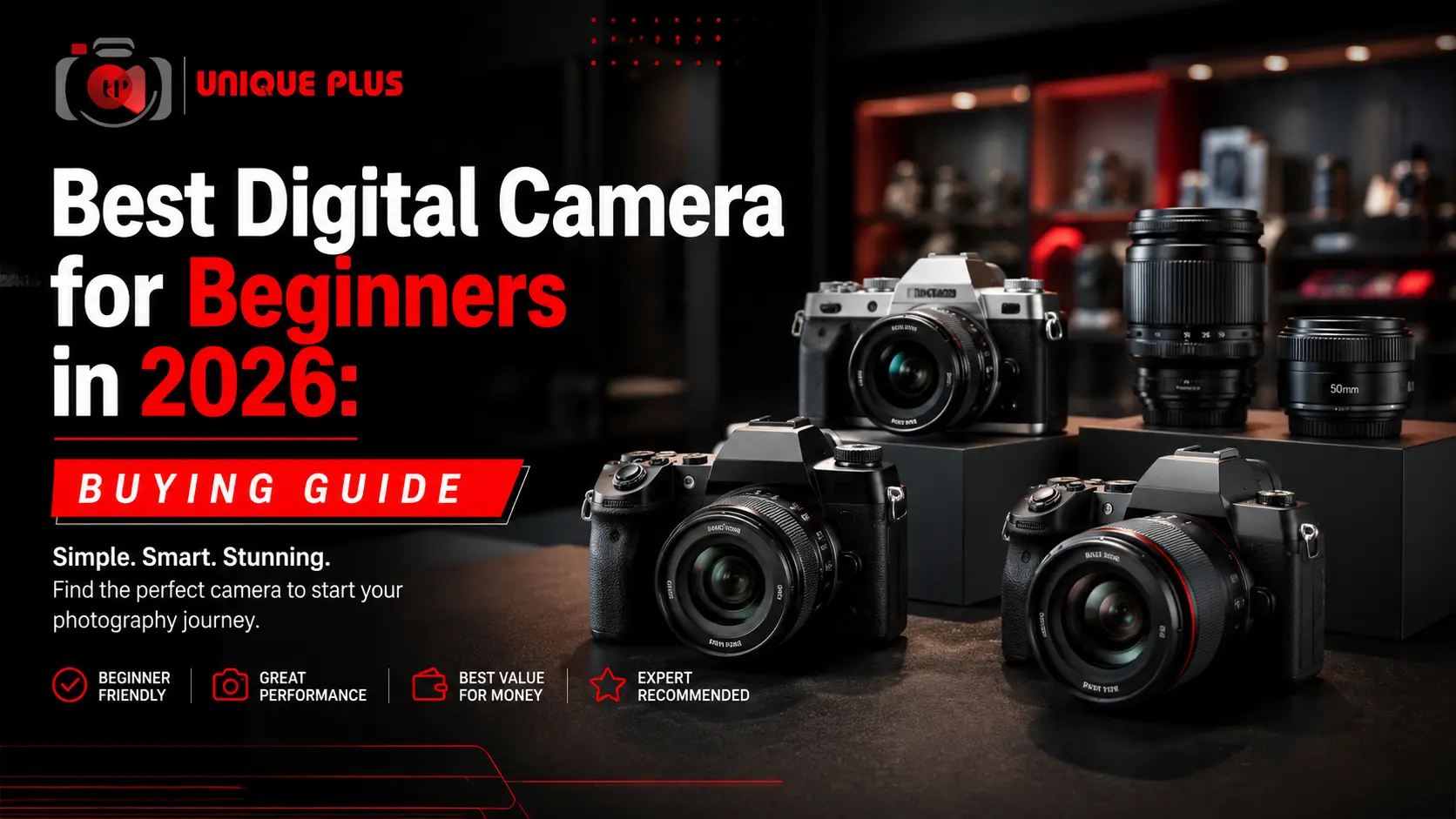
Choosing the best digital camera for beginners in 2026 comes down to ease of use, image quality, and room to grow, not just the highest spec sheet. For most new buyers, a simple mirrorless camera or an entry-level DSLR with a kit lens is the smartest starting point. Current beginner-focused reviews consistently favor models like the Canon EOS R50 and Canon EOS R100 for their usability and value, while also noting that mirrorless cameras now lead the market for beginners.
What Makes a Camera Good for Beginners?
A good beginner camera should be easy to learn, comfortable to hold, and forgiving when you are still figuring out exposure, focus, and composition. The best options usually include automatic modes, clear menus, reliable autofocus, and a lens system that gives you upgrade paths later. It should also be affordable enough that you can spend money on a lens, memory card, and bag instead of putting everything into the body alone.
Types of Digital Cameras for Beginners
There are four main camera types beginners usually consider: mirrorless, DSLR, compact, and action cameras. Mirrorless cameras are generally the best all-around choice in 2026 because they are smaller, lighter, and better for video, while DSLRs remain attractive for lower cost and strong battery life on the used market. Compact cameras are simple and portable, and action cameras are good for travel or sports, but they are less flexible for learning photography fundamentals.
Key Features to Look for in a Beginner Camera in 2026
When shopping in 2026, focus on practical features instead of chasing the biggest numbers. A 16–24MP sensor is already enough for most beginners, and APS-C sensors offer a strong balance of image quality, size, and price. Look for fast autofocus, a flip or articulating screen, decent battery life, built-in guidance modes, and support for a lens system with affordable glass.
Best Digital Cameras for Beginners in 2026
Here are the beginner-friendly models most often recommended in current reviews:
| Camera | Best for | Why it stands out |
|---|---|---|
| Canon EOS R50 | Overall beginner pick | Lightweight, easy to use, strong autofocus, and very good for both photo and video. Buy Now |
| Canon EOS R100 | Budget beginners | Very affordable, simple controls, and a good entry point into Canon’s RF system. Buy Now |
| Nikon D3500 | Used DSLR value | Straightforward operation and great value if you want a cheap DSLR with many used lenses available. |
| Sony ZV-E10 | Video-first beginners | Strong autofocus, compact body, and features that suit vlogging and content creation. |
| Canon EOS RP | Beginners wanting full frame | Budget-friendly full-frame option, though less ideal for video due to missing in-body stabilization. |
For most first-time buyers, the Canon EOS R50 is the safest all-round recommendation, while the Canon EOS R100 is the better pick if budget is the top priority. If you want to buy used and focus mainly on still photos, the Nikon D3500 remains a strong value option.
Essential Camera Accessories for Beginners
A camera body alone is not enough to get started smoothly. You should also budget for a good SD card, an extra battery, a camera bag, and a microfiber cloth, plus a spare lens later if you want to grow beyond the kit lens. For beginners who plan to shoot handheld often, a lightweight tripod can also be very useful for learning composition and low-light photography.
Common Mistakes Beginners Make When Buying a Camera
One common mistake is overspending on advanced features you will not use yet. Another is buying a full-frame camera too early, when an APS-C or entry-level mirrorless model would be simpler and more cost-effective. Beginners also often ignore the lens ecosystem, even though lenses matter more to long-term results than the body alone.
Why Choose Unique Plus for Buying Digital Camera
If Unique Plus is your store or brand page, position it around selection, guidance, and after-sales support. Beginners value trusted advice, easy comparison, warranty clarity, and bundled accessories that remove confusion from the buying process. You can also highlight camera choices for different needs, such as photography, travel, vlogging, and content creation, so customers can find the right fit faster.